Price of Passage: A Clean Air Zone Cost Routine for Everyday Delivery Routes
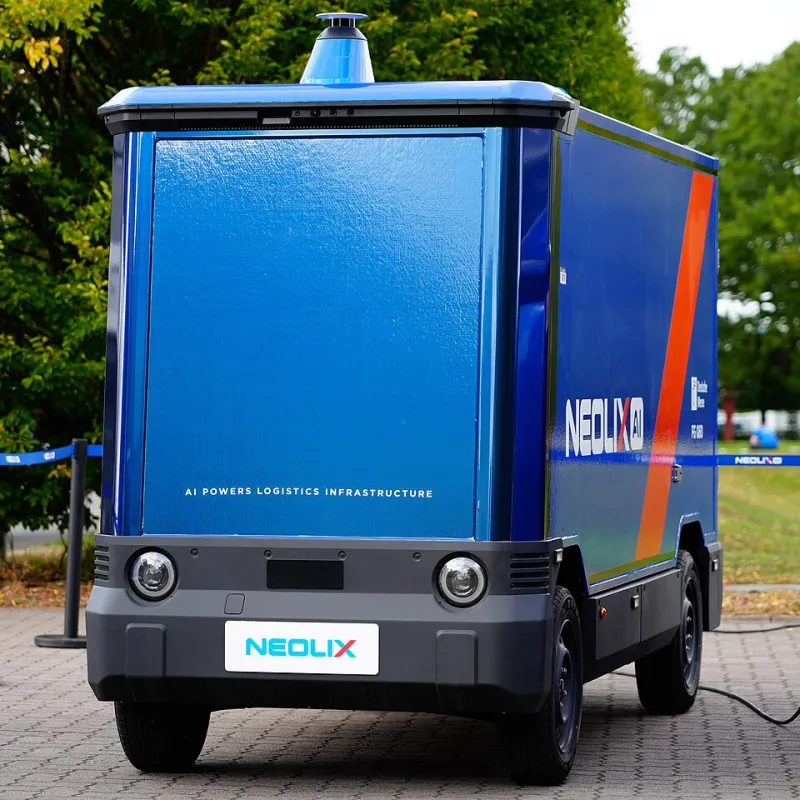
Photo: MarcelX42, CC BY-SA 4.0, via Wikimedia Commons
For many small UK operators, the Clean Air Zone charge first appears as an unfamiliar line on a bank statement. A van has crossed a boundary on an ordinary Tuesday, the camera has read the plate, and a daily sum has been taken. The difficulty is not the individual charge. It is the way a modest daily amount becomes a structural cost when it is repeated across several vehicles, several days a week and several months of the year.
A Clean Air Zone is, in effect, a location cost. It sits alongside rent, parking and fuel, and it should be treated with the same discipline. The purpose of this article is to set out a straightforward cost routine for small delivery operations: one that identifies exposure, tests alternatives and protects customer promises while avoidable chargeable trips are removed.
Establish the boundary before counting the cost
The first mistake is to rely on a general impression of where a zone begins. Boundaries are not always neat circles around a city centre. They can follow a ring road, a river or a particular junction, and a single street can sit on the chargeable side while the adjacent industrial estate does not. For an operator running multi-drop rounds, that distinction matters more than the size of the zone on a map.
Begin with the official boundary checker for the relevant scheme, using full postcodes and, where possible, street-level confirmation. Record the result for every address that appears regularly in the delivery profile: the depot, the main customer sites, the collection points and any subcontractor handover locations. The same discipline should be applied to London's Ultra Low Emission Zone and to the penalty-based Low Emission Zones in Scotland, which operate differently but still affect route planning and vehicle choice.
Vehicle compliance is the second half of the boundary question. A charge normally applies only to vehicles that do not meet the required emission standard, so the fleet register should record the Euro standard or fuel type for each van. The DVLA vehicle enquiry service can confirm the recorded details against the registration mark. Where vehicles are hired or borrowed, the same check should be made before the first run rather than after the first penalty notice.
A simple ledger for chargeable mileage
A useful ledger does not need to be complicated. It needs to be consistent. Set it out with one row per regular run and the following columns: run name, vehicle registration, compliance status, zone crossed, chargeable days per week, daily charge, weekly cost, monthly cost, annual cost and contribution margin per drop.
For a hypothetical operator with one non-compliant van making four chargeable trips a week at a daily charge of £9, the weekly cost is £36, the monthly cost is roughly £156 and the annual cost is approximately £1,872. That figure is not catastrophic in isolation, but it is real money. It becomes more significant when it is compared with the margin on the drops that the run serves. If the run carries low-value consignments, the charge may absorb a substantial share of the contribution.
The ledger should also carry a column for time. A route change that avoids a charge but adds forty minutes of driving each day has a cost too, in wages, vehicle wear and reduced capacity for the next job. The comparison is not between a charge and no charge. It is between the total cost of the current arrangement and the total cost of the alternative.
Three ways to remove the charge
Route change is usually the first option to test. This may mean consolidating drops outside the boundary, using a transfer point on the edge of the zone, or rearranging delivery days so that chargeable addresses are grouped into fewer runs. In some cases a customer can be served from a nearby collection point without any loss of service quality. The test is whether the revised route keeps the promise made at the point of sale.
Vehicle upgrade is the second option. A compliant van removes the daily charge, but it brings capital cost, depreciation, insurance and, for electric vehicles, charging arrangements. The comparison should be made over the likely holding period, not on the basis of a single month. For a small fleet, one compliant vehicle allocated to the most charge-intensive run is often more practical than replacing the whole fleet at once.
Consolidation is the third option. Fewer, fuller runs reduce both chargeable days and general operating cost. This may require changes to order cut-off times or a review of minimum order quantities, but it is often the least capital-intensive route. The ledger should show the effect on service levels as well as on cost.
Keeping customer promises intact
A charge-avoidance plan should not become a silent deterioration in service. Delivery windows, cut-off times and any zone-related conditions should be stated clearly in contracts and order confirmations. Where a charge is unavoidable for a particular address, the commercial treatment should be agreed in advance rather than absorbed indefinitely.
Operationally, chargeable and non-chargeable runs should be separated in the dispatch plan, with compliant vehicles assigned to the charge-sensitive work first. Drivers should understand that a detour into a zone for a break, a refuel or a minor errand creates the same daily liability as a delivery. An exception log is useful: it records when a chargeable trip was made, why it was necessary and whether it could have been avoided. Over a quarter, that log reveals more than any single invoice.
Review the ledger quarterly
Charges, boundaries and vehicle standards can change. A quarterly review keeps the ledger honest. Check the official scheme pages, confirm that the fleet register is current, and compare the actual charge total with the forecast. If a run has become persistently chargeable, the question is no longer whether to pay it, but whether the location and the route still make commercial sense together.
A Clean Air Zone charge is not simply a tax on driving. It is a signal that the economics of a particular location have shifted. For the small operator, the sensible response is neither panic nor passive acceptance, but a cost routine that makes the exposure visible and the alternatives comparable.