Kerbside Discipline: A Workable Delivery Routine for UK High Streets

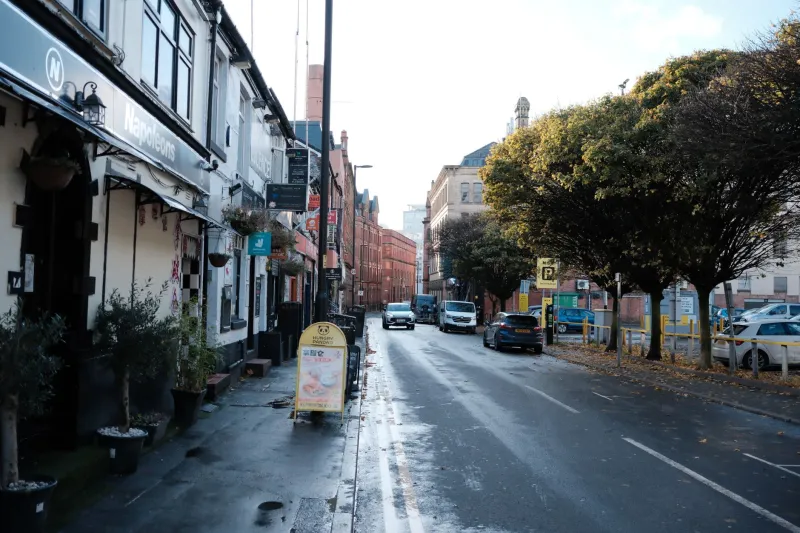
Photo: Stephen McKay , CC BY-SA 2.0, via Wikimedia Commons
For many small retailers and service businesses, the most difficult part of the delivery is not the route to the town centre but the final few metres. A high-street unit may have no rear access, no service yard and no dedicated bay. The kerb outside is shared with shoppers, buses, cyclists and neighbouring businesses, and it is governed by restrictions that are not always obvious to a driver under time pressure.
The practical answer is not to treat the kerb as a loading bay by assumption. It is to build a repeatable routine around what the street actually permits, when it is least congested and how drivers are briefed before they arrive. The following guidance is intended for small organisations that need reliable deliveries without the benefit of a controlled site.
Read the kerbside before the timetable
The first step is to establish what the restrictions are, rather than what they appear to be. Parking and loading are separate legal concepts in the UK. A single yellow line generally restricts waiting, but loading may still be permitted unless a sign or kerb marking says otherwise. Double yellow lines prohibit waiting, yet loading may be allowed for a short period unless an order specifically bans it. A 'loading only' bay is not a general parking space, and a 'no loading' marking applies to goods vehicles as well as to waiting vehicles.
Pedestrian zones and timed restrictions add another layer. Many high streets restrict vehicle access during trading hours, with an exemption for loading that may end well before the shops close. Some councils enforce these restrictions with camera technology rather than solely with civil enforcement officers, so a driver who assumes that a quiet street means a relaxed street can generate a penalty charge notice quickly.
Rules also differ across the UK. Pavement parking is subject to different regimes in England, Scotland and Wales, and in England outside London it often depends on local traffic regulation orders rather than a single national prohibition. The practical point for an SME is to obtain the order or the council's kerbside guidance for each street where it regularly delivers, and to keep that information with the delivery instructions.
Build a delivery window that matches the street
Once the restrictions are known, the delivery timetable should be designed around them. For many high streets, the most workable window is early morning, before pedestrianisation begins and before the school run and commuter traffic peak. For others, it may be late afternoon or early evening. The right answer depends on the street, not on a generic preference for 'off-peak' delivery.
Consolidation is equally important. A small retailer that receives three separate parcels from three carriers on the same day may be creating three separate kerbside stops, each with its own risk of obstruction and penalty. Where suppliers allow it, grouping orders into fewer deliveries reduces the time a vehicle spends at the kerb. For businesses that use their own vans, a fixed daily delivery slot is often more manageable than an open-ended 'sometime today' arrangement.
It is also worth checking whether the building has access that is not visible from the street. A rear door, a shared service yard or an arrangement with a neighbouring business can remove the kerbside problem altogether. This should be established before the lease is signed, but it can still be negotiated afterwards with the landlord or neighbouring occupier.
Brief the driver in writing
A verbal instruction to 'park outside and unload quickly' is not a delivery brief. Drivers who work for multiple customers need a one-page instruction that covers the location, the restriction, the permitted window and the contact person on site. Photographs of the loading point and the relevant signage are more useful than a postcode alone, particularly where a map pin drops the driver at the wrong end of a pedestrianised street.
The brief should state clearly that a hazard warning light is not a substitute for a lawful loading position. It should also identify the parts of the kerb that must not be blocked: pedestrian crossings, bus stops, cycle lanes, disabled bays and dropped kerbs. Where the delivery requires a trolley or a two-person lift, that should be noted so that the driver does not attempt a longer stop than the street can accommodate.
Engine idling is a related issue. Many councils now take a firmer line on stationary vehicles with engines running, and a high-street delivery that involves a prolonged wait can attract attention from both enforcement officers and neighbouring businesses. Switching off during the unloading period is a simple discipline to include in the brief.
Manage the shared kerb as a shared resource
The politics of a high street are often as important as the regulations. A delivery that blocks a neighbouring shop's frontage, even briefly, can create friction that outlasts the delivery itself. Where several businesses receive goods at similar times, an informal arrangement among occupiers can be more effective than separate requests to the council. Some business improvement districts and town centre partnerships already coordinate delivery access, and it is worth asking whether such a scheme operates locally.
Signage should be used sensibly. A temporary notice explaining that a delivery is in progress is not a legal authority, but it can reduce conflict with other road users. Permanent signage on private forecourts is a different matter and should be checked against the terms of the lease and any planning permission.
Keep the paperwork in order
Penalty charge notices are not the only cost of a poorly managed kerbside. Repeated fines, failed deliveries and damaged stock all affect the operation. A simple record of delivery times, vehicles and any enforcement notices helps an SME identify patterns and, where a notice is disputed, provides the evidence needed for an appeal. Councils publish their appeals process, and it is worth keeping photographs of the signage and kerb markings at each regular delivery point.
Some councils offer business parking permits or dispensations for specific operational needs, although these are not usually designed for general loading. The relevant highways or parking team can confirm what is available for a particular street. It is better to ask before a routine is established than to seek retrospective permission after a fine.
A short checklist for high-street deliveries
- Confirm the traffic regulation order or council guidance for each regular delivery street.
- Identify the permitted loading window and any pedestrian zone hours.
- Check for rear access or shared service arrangements before relying on the kerb.
- Consolidate deliveries where suppliers permit it.
- Provide drivers with a written brief, photographs and a site contact.
- Forbid obstruction of crossings, bus stops, cycle lanes and accessible bays.
- Record delivery times and any enforcement notices.
A high street will never offer the certainty of a gated yard, but it does not have to be a source of constant penalties and conflict. By treating the kerb as a regulated shared space rather than an informal loading bay, small firms can keep goods moving while staying on the right side of the street.