The Only Door You Have: Rethinking Single-Site Risk Before the Landlord Calls
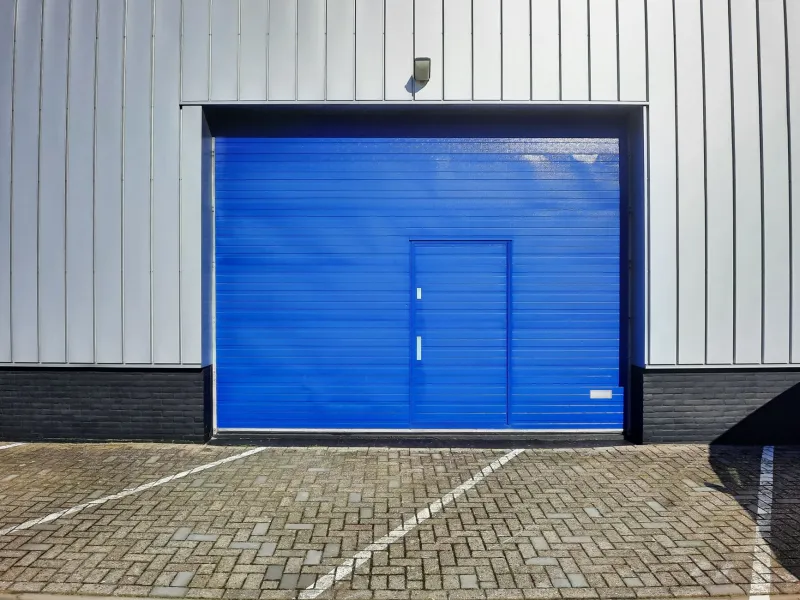
There is a particular kind of confidence that comes from running a business from a single, well-chosen site. The rent is manageable, the team is together, and everyone knows where the fire extinguishers are. It is efficient, and it is entirely rational.
It is also, structurally, a single point of failure. Every order, every employee, every piece of equipment and every customer relationship sits behind one door. When that door cannot be opened — for a day, a fortnight, or a quarter — there is no second door to fall back on. The business does not degrade gracefully. It stops.
This is not an argument for taking on a second site. For most SMEs that would be an expensive answer to a question nobody asked. It is an argument for spending a modest amount of attention on the question before it is asked for you, at nine o'clock on a Monday morning, by a managing agent with bad news.
The four ways a single site fails
Risk registers tend to focus on catastrophe. In practice, the events that take a UK small site offline are usually more mundane.
Water. Flooding is the obvious case, and the Environment Agency's flood map is a free starting point, but a failed sprinkler valve, a blocked gully or a neighbouring unit's burst pipe will close a site just as thoroughly as a river.
Power and utilities. A substation fault, a damaged telecoms duct or a water supply interruption can make premises unusable even when the building is intact. Many small units have no generator, no secondary connectivity and no idea which MPAN or MPRN identifies their supply.
The landlord. Dilapidations disputes, a change of ownership, a sale of the freehold, major works to the estate, or simply a locked gate over a service charge argument. Access rights that everyone assumed were permanent turn out to be contractual, and contracts can be contested.
The street outside. A road closure from a collapsed wall, a police cordon, unsafe cladding on a neighbouring building, or a revised traffic order that removes the loading bay your whole operation depends on. Access is not a property right you own; it is a condition granted by others.
What a lightweight plan actually contains
A useful contingency plan for a single-site SME fits on one side of A4. Four lists, one page, reviewed annually.
1. Alternative space, named
Not "we would find somewhere". Two specific options, with a contact name, a rough daily cost and a realistic capacity — how many pallets, how many desks, whether there is power and connectivity. A friendly neighbouring business with spare racking, a local third-party logistics operator, a serviced office, or a self-storage unit large enough to receive a stock transfer.
Check the boring details now: whether business use is permitted, whether your insurer will extend cover to goods stored elsewhere, and whether the site can accept a 7.5-tonne vehicle. A storage unit that cannot take a delivery is not an alternative site.
2. Key contacts, in one place
Landlord or managing agent, out-of-hours number included. Insurance broker and policy number. Utility account numbers and meter references. Waste contractor. The council's environmental health and licensing teams. Your two most critical suppliers and your two largest customers. And a named deputy for every internal role that matters, because the person who holds all this knowledge is also the person who might be unreachable.
3. Stock and equipment priorities
Rank what must be saved first. For most SMEs the order is roughly: anything perishable or time-limited, then items on which orders depend, then high-value but relocatable stock, then everything else. Photograph the site quarterly — insurers ask for evidence of stock values, and memory is a poor witness.
4. A communication chain that has been tested
One channel, one order of names. Who tells staff, in what sequence, by what method, and what they are told to do in the meantime. Who speaks to customers, and what the standard line is. Who handles the insurer. Then — and this is the part that separates a plan from a document — ring the chain once a year and see whether it works. Numbers change. Deputies leave.
Read two documents before you need them
First, your lease. Specifically the access provisions, the service charge mechanism, and whether the landlord may close common parts for works without notice. Second, your insurance schedule. Business interruption cover is often written to a short indemnity period and may exclude utility failure or denial of access unless extended. Both are worth a conversation with a broker or solicitor while the site is still trading normally.
The discipline is in the testing, not the writing
The temptation is to treat this as an administrative exercise: draft it, file it, forget it. That produces a document that will be discovered, unread, by someone under pressure, and found to contain a phone number that stopped working two years ago.
A more useful habit is a single ninety-minute session each year. Walk to the alternative site. Ring the landlord's out-of-hours number with a non-urgent question. Check that the deputy knows they are the deputy. Confirm the insurer still has the right stock figure. Ninety minutes, once a year, against the possibility of a fortnight of paralysis.
Single-site trading is not reckless. It is a legitimate, sensible choice for thousands of UK SMEs. But it removes the margin for improvisation, and improvisation is what most businesses are quietly relying on. Write the page. Then test it, while everything is still fine.