Ground Beneath the Wheels: A Drainage Capacity Check for Small UK Yards
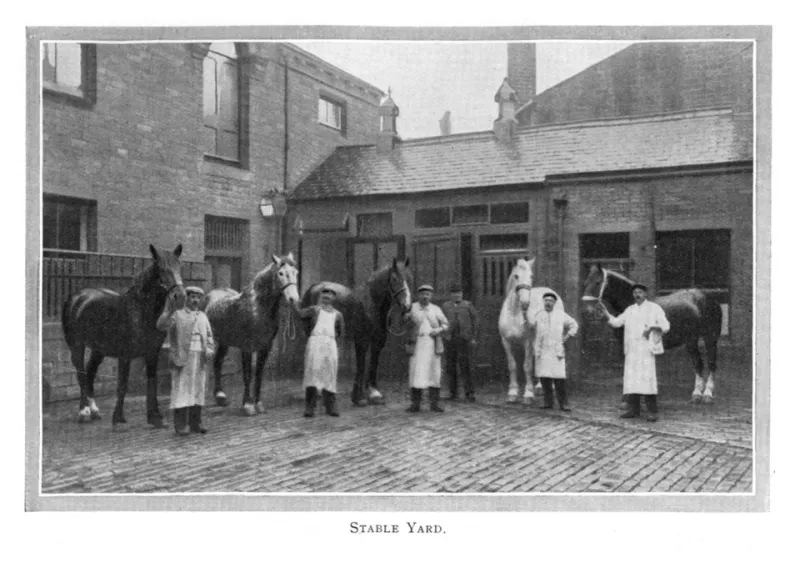
Photo: Photographer unknown, book authored by Owen Balmforth (1855-1922)., Public domain, via Wikimedia Commons
Most access surveys for small UK sites concentrate on what can be seen at eye level: gate widths, turning circles, kerb heights and the position of the nearest lamp-post. The surface beneath the wheels is often treated as a given. Yet a yard apron is not simply a slab of concrete or tarmac. It is a working surface punctuated by drainage covers, inspection chambers, gullies and, frequently, services running at shallow depth. When a heavier vehicle arrives, those buried details become part of the load path.
A routine 7.5-tonne delivery can expose a cover that was never rated for repeated wheel loads. An 18-tonne vehicle, or a refuse lorry negotiating a tight turn, can do more. The result is rarely dramatic in the way a wall collapse might be. More often it is a cracked frame, a depressed cover, a fractured pipe beneath and a yard that must be closed while the damage is assessed. The insurance conversation that follows tends to centre on a simple but uncomfortable question: what did the site know, and when did it know it?
Why the apron is a structural assumption
Small sites often inherit drainage from an earlier use. A former car park may have covers selected for occasional light vehicles. A yard serving a workshop may have a private sewer running beneath the main loading area because that was the cheapest route when the building was converted. A soakaway may sit under what is now the turning circle. None of this is necessarily visible from a site plan, and none of it is captured by a standard photographs-and-measurements access survey.
The practical risk is not limited to the cover itself. A shallow duct or pipe beneath the apron can be crushed by a wheel load transmitted through the surface. A private drainage run may be the responsibility of the occupier rather than the water company, which changes both the repair route and the insurance position. For a small organisation, the cost of uncovering that arrangement after a delivery is far higher than the cost of asking about it beforehand.
Reading the cover, not just the grate
A useful audit begins with a walkover of every vehicle route into and across the yard. Record each cover, gully and chamber, including those at the perimeter and those in the middle of what appears to be a turning area. Photograph the cover and its frame, and note any markings. In the UK, drainage covers are commonly marked to BS EN 124, with load classes such as A15, B125, C250, D400, E600 and F900. The class indicates the intended load environment. A cover marked A15 is intended for pedestrian and cycle areas; B125 for car parks and light vehicle areas; C250 for kerbside channels; and D400 for carriageways and similar heavy traffic. A yard receiving regular delivery vehicles should not rely on assumptions about what lies under a coat of paint or a layer of grit.
Markings can be worn, obscured or absent. Where the class cannot be read, treat the cover as unverified rather than assuming it is suitable. Note also the condition of the frame, the bedding and the surrounding surface. A rocking cover, a cracked frame or a patch of subsidence beside a chamber can indicate that the asset has already been stressed.
Records before rods: assembling the paper trail
Before commissioning any physical survey, gather the available records. Ask the landlord or managing agent for drainage plans, service drawings and any historical surveys. Check the property information pack and the lease for rights and responsibilities relating to private drainage. Contact the local water authority for public sewer records where relevant, and use the utility asset registers before any intrusive work. These records will not always be complete, but they establish whether the site has a known private sewer, pumped drainage, soakaway or shallow service crossing beneath the apron.
Where records are missing, a CCTV drainage survey and a cover-lifting survey by a competent contractor can fill the gap. The aim is not to map every pipe in the district. It is to answer three questions: what is under the vehicle route, what condition is it in, and what load can it safely take?
What private drainage changes about routing
If a private sewer or soakaway lies beneath the main apron, the site has a routing choice even before it has a repair choice. Heavy vehicles can sometimes be directed to a different part of the yard, or a turning manoeuvre can be revised to keep wheel loads away from the vulnerable asset. This is not a substitute for repair where the asset is already failing, but it can reduce repeated loading while a permanent solution is arranged. The revised route should be recorded, marked on the ground where practical, and included in the delivery note rather than left as local knowledge.
A delivery note that drivers can use
The audit is only useful if its findings reach the people who manoeuvre vehicles. A short delivery note can be issued alongside the site access details. It should state the maximum vehicle size the yard is currently assessed for, identify any covers or areas to avoid, and give a clear instruction for what a driver should do if a cover moves, cracks or appears damaged. Keep the language practical and avoid engineering shorthand that means little at the gate. The note should also name the site contact and make clear that the route is a condition of access, not a suggestion.
Protect, reroute or replace: a simple cost test
Once the findings are in, the site faces a decision. Protection, such as a load-spreading plate or a revised route, may be appropriate where the asset is sound but under-rated for occasional heavier traffic. Rerouting may be suitable where the vulnerable drainage is localised and an alternative path exists. Replacement is the more durable answer where covers are cracked, frames are failing or shallow pipes are already deformed.
The cost comparison should include the immediate works, the potential cost of a collapsed surface, the operational cost of a closed yard and the insurance excess and disruption that would follow. For many small organisations, the decisive figure is not the quotation for a new cover but the cost of a week without access. Auditing the ground beneath the wheels is a modest exercise. Discovering it after the first heavier vehicle has arrived is a different order of problem.