Closing the Loop: Making Returns Pay Their Way Through Smarter Site and Route Choices
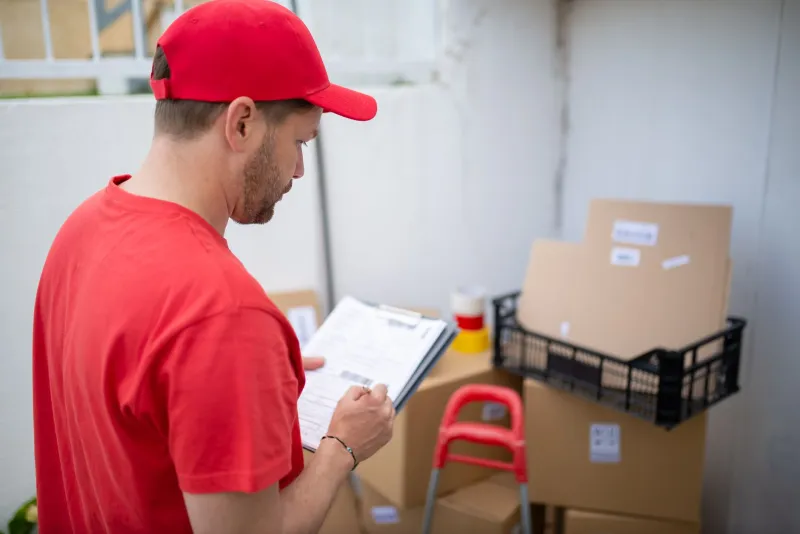
Returns are often managed as a customer-service process: a label is issued, a parcel comes back, and someone deals with it when there is time. For many UK SMEs, that approach works until volumes rise. Then returns occupy packing benches, overflow into aisles and turn a manageable cost into a margin problem. The underlying issue is often location. A business that has designed its site and routes around outbound orders may have no deliberate place for goods travelling in the opposite direction.
In 2026, with parcel networks promoting convenient drop-off and consumers treating returns as standard, small firms need a reverse-logistics loop rather than an afterthought. The loop does not have to be complex. It does have to be mapped, costed and given physical space.
Treat returns as a site-selection question
Site searches usually weigh motorway access, carrier proximity and outbound packing space. Returns add different requirements: a receiving point, a secure quarantine area, a triage bench and space for goods awaiting restock, repair, resale or disposal. If those activities are squeezed into the outbound floor, every return competes with dispatch. Check lease restrictions and planning use before assuming returned goods can be stored outside or processed in a shared yard. Battery items, chemicals and damaged goods may need separate handling.
A simple five-stage loop
A workable model has five stages. First, collection: where the customer hands over the parcel, whether that is a carrier drop-off network, a locker, a local shop or the business's own counter. Second, consolidation: how individual returns are grouped so they do not each travel separately to the main site. A local micro-hub or carrier depot can reduce line-haul. Third, triage: inspection and a decision on condition. Fourth, disposition: restock, refurbish, resell through an outlet, recycle or return to supplier. Fifth, feedback: data on why items come back, passed to buying and listing teams.
Each stage needs a location and an owner. If consolidation is missing, returns arrive in dribs and drabs. If triage has no bench, parcels wait. If disposition is unclear, space fills with indecision.
Cost checks before volumes overwhelm
Calculate cost per return, not just the headline carrier fee. Include transport, labour minutes, storage, shrinkage and disposal. Compare a collection service with a drop-off network; the cheaper option may depend on volume and item value. Check carrier terms for returns labels, collection charges and liability. Estimate space: how many square metres per hundred returns per week, and how much racking or cage capacity is needed. Check insurance and lease rules for stored returns, especially high-value or hazardous items. Finally, test the peak. The weeks after Christmas and major sales events are not the time to discover that the returns area is also the only fire exit route.
Design the flow, then the space
Separate returns from outbound where possible. Use a one-way flow: receive, inspect, decide, dispatch. Keep a quarantine area for items that are not yet cleared. Label by disposition so that restock does not mix with repair. If space is tight, a returns cage and a scheduled weekly collection may be enough. A local consolidation partner can absorb peak volumes, but check the contract, the handling standards and the cost per item.
Make the loop protect margin
A well-designed loop reduces miles, double handling and failed collections. It can also turn returns into a local advantage: a site near a carrier hub may cut line-haul, while a good drop-off network can reduce the time customers wait for a refund. Review the loop quarterly and set thresholds for outsourcing. Returns are not a failure of the sale; they are part of the operating model. If the site and routes are chosen with that in mind, the margin is easier to defend.